
Leak-driven mold removal in Ocala runs $1,000–$8,000. Unlike humidity growth, it has a source you can point at and a concentrated shape. Fix the plumbing first, then remove, then dry — in that order. Many local specialists don't charge for the walkthrough; ask when they call.
How to tell the two apart in a minute, where leaks hide in local housing, and why the sequence is not negotiable.
Telling the two apart
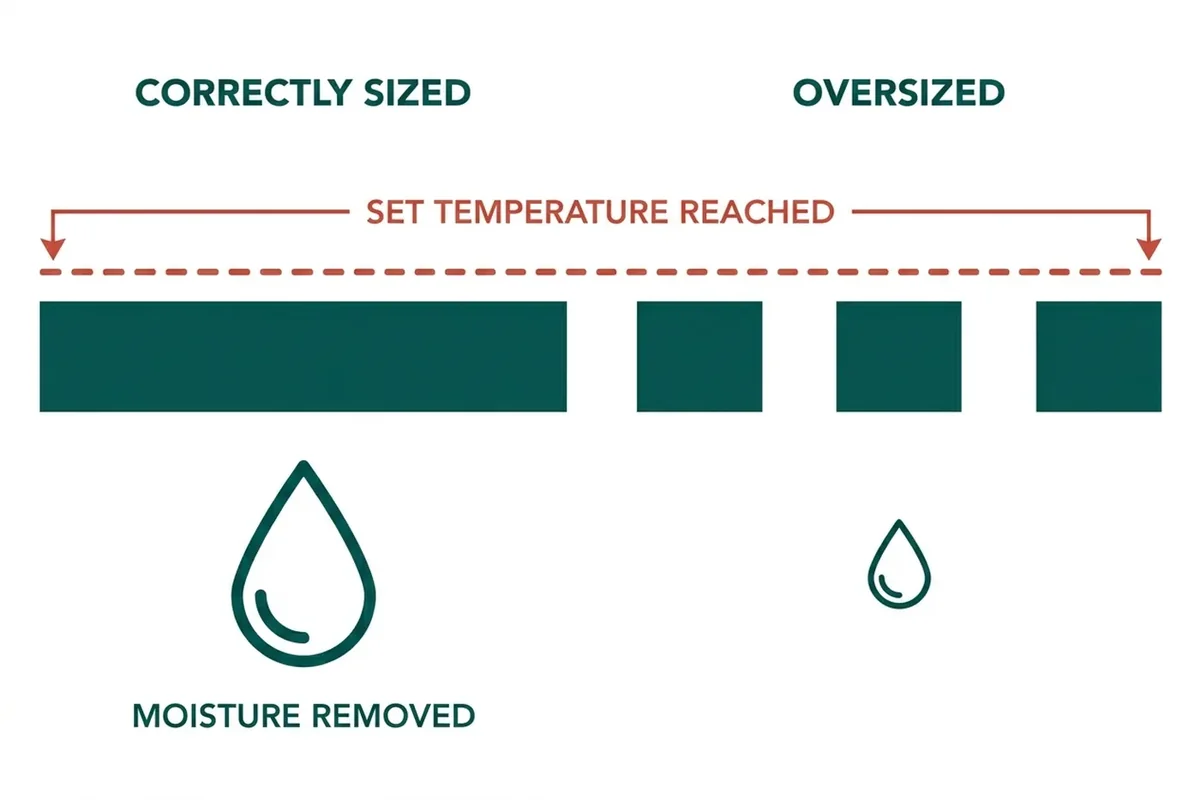
This site argues at length that most mould in Marion County is airborne moisture rather than plumbing. That argument would be worthless if we could not tell you how to check, so here is the distinction we use.
| Leak | Humidity | |
|---|---|---|
| Shape | Concentrated, with a centre | Thin, spread over many surfaces |
| Where | Below or beside a water-carrying thing | Still corners, closets, exterior walls, everywhere |
| Gets worse | Toward the source | Toward wherever the air moves least |
| Materials | Whatever is wet, including structure | Soft things first — leather, fabric, paper |
| Seasonality | None. Leaks do not care | Worse through the cooling season |
| Hygrometer | Room may read normal | Reads above 60 percent |
The last row is why a cheap humidity gauge is worth buying before anybody quotes you. It separates the two explanations for the price of a takeaway coffee.
Where leaks hide in local housing
- Under sink cabinets, where a slow supply weep runs down the back and never shows on the floor
- At the toilet flange, where the damage is under the flooring before it is on it
- Washing machine and water heater connections, especially in a garage or interior utility closet
- Inside walls, on supply lines feeding an upstairs or an outside tap
- Beneath the slab. Slab-on-grade construction is common here, and a supply leak under one shows up as a warm floor patch, a jump in water usage, or running water you can hear with everything closed
The sequence, and why it does not bend
- Plumber first. Find and repair. Remediating around live water is spending money on somebody else’s timetable
- Remove. Affected porous material out under containment, remaining surfaces HEPA cleaned
- Dry to a number, verified before anything is closed up. Sealing damp framing is how this starts over
- Rebuild, which is separate work and should be a separate line you are free to give to somebody else
If it turns out to be humidity after all
That happens often, and it is good news in the sense that there is nothing to repair and bad news in the sense that the fix is systemic. A good specialist will tell you which one you have before quoting anything, because quoting a leak remediation on a house with no leak is the most expensive mistake available in this market. The alternative path is on the humidity page.
Leaks, answered plainly
What does leak-driven mold removal cost?
Usually $1,000-$8,000. The spread is wide because a leak found in week one is a drying job and a leak found in year two has fed growth through framing, insulation and cabinetry. Time under water drives this far more than the size of the leak.
How do I tell a leak from a humidity problem?
Location and shape. Leak growth is concentrated, has an obvious centre and gets worse toward it. Humidity growth is thin, widespread and shows up in still corners all over the house. One has a source you can point at; the other does not.
Where do leaks usually hide here?
Under kitchen and vanity cabinets, at washing machine and water heater connections, at the toilet flange, and in supply lines running through walls. Slab construction is common locally, which means a supply leak under the slab is a real possibility.
What is a slab leak?
A supply line failing beneath a concrete floor slab. Signs include a warm patch on the floor, an unexplained rise in water usage, or the sound of running water with everything turned off. Confirming and repairing one is a plumber's work, not a mold remediator's.
Do I fix the leak first?
Always. Remediating around active water is money spent on a schedule somebody else controls. Get the plumbing repaired, then remove what grew, then dry to a measured target - in that order, without exception.
Will insurance cover it?
A sudden discharge stands the best chance because it is an event. Slow seepage over months is normally classed as maintenance and excluded. Most policies also cap mould cover far beneath the figure the building itself is insured for, so find that cap before you decide a claim is worth making. Your adjuster rules on it, not us.
Book an Ocala mold walkthrough
If you own a humidity gauge, tell us what it reads and where it sits. If you do not, tell us what the thermostat is set to and whether the house sits empty for part of the year. Those two answers explain more local mold than any description of a stain, and they shape what the specialist brings. A local specialist serving Ocala calls you back.