
Mold removal in Ocala costs $1,500–$6,000 on a typical job and $6,000–$15,000 whole-home, with air handler work at $1,000–$4,000. On an airborne problem the bill tracks how long the air has been above 60 percent.
The five stages a humidity problem passes through, what each one costs, and the invoice that is not mold work.
Five stages, and where the money starts
A leak does a lot of damage in one place, quickly. Damp air does the opposite: it works slowly across every surface at once, and it climbs through materials in a consistent order. Where you catch it decides almost everything about the price.
| Stage | What has happened | Cost to us |
|---|---|---|
| 1. Air only | Hygrometer reads over 60%; nothing has grown yet | $0 — there is nothing to remove |
| 2. Contents | Leather, fabric, paper and stored things affected | $500–$3,000 |
| 3. Surfaces | Thin growth on painted walls, ceilings, behind furniture | $1,500–$4,000 |
| 4. Porous materials | Into drywall paper, trim, cabinetry, insulation | $3,000–$8,000 |
| 5. Whole house and equipment | Most rooms plus the air handler and ducts | $6,000–$15,000 |
Stage one is the one worth dwelling on. A house whose air is wrong but which has not yet grown anything is a house that needs an air conditioning contractor and no remediation at all. That is a real outcome, it is free to establish, and a $12 hygrometer is how you find out which stage you are at. The 60 percent page explains how to read it.
Every line, priced
| Work | Range | What moves it |
|---|---|---|
| Walkthrough, humidity reading, written price | Often free | The company |
| Contents and closets | $500–$3,000 | Volume, and how much is leather or upholstery |
| Humidity-driven removal | $1,500–$6,000 | How many surfaces, not how bad any one looks |
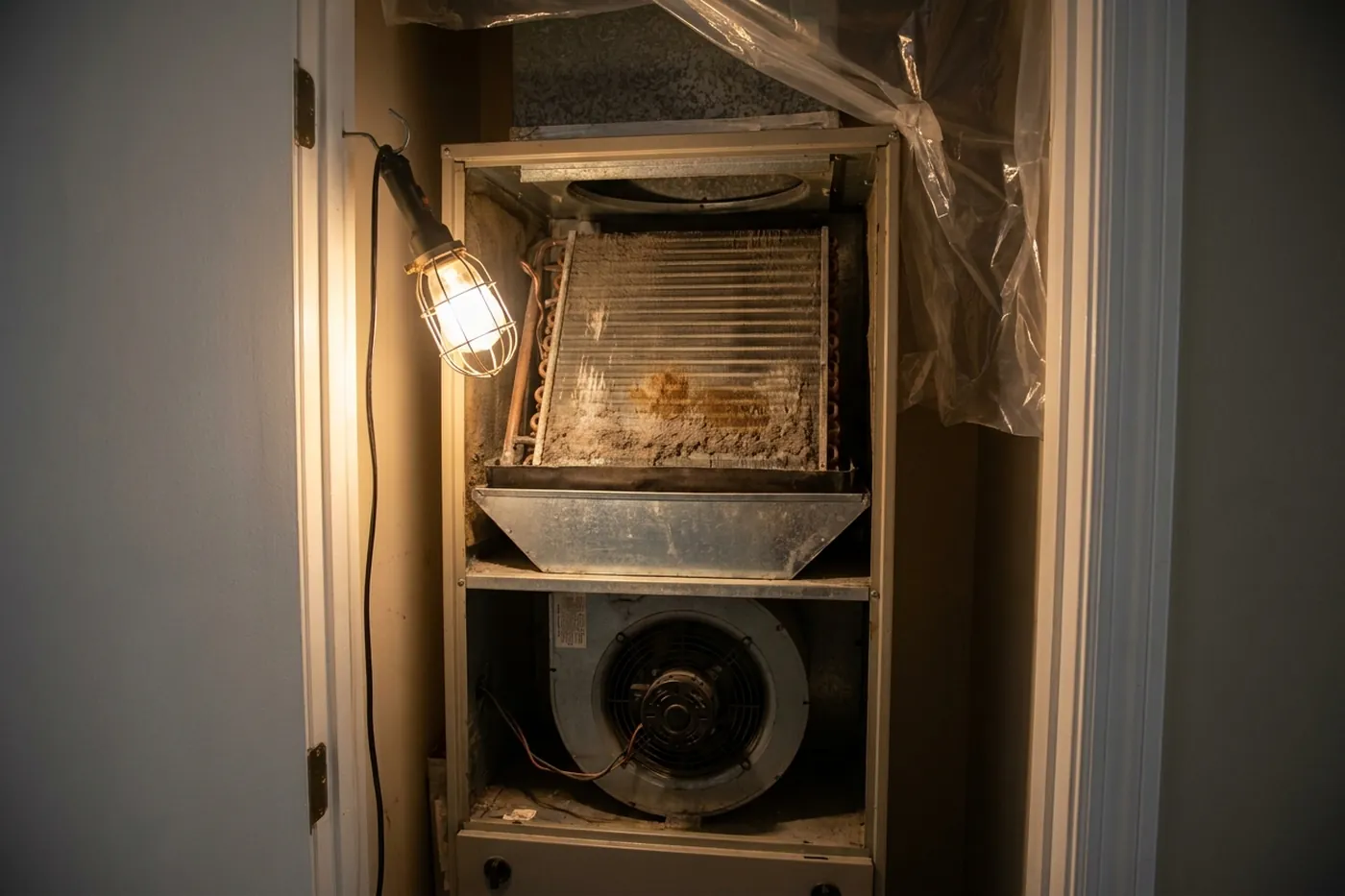
| Air handler, coil and pan | $1,000–$4,000 | Access more than anything else |
| Leak-driven removal | $1,000–$8,000 | How long it ran before anybody found it |
| Whole-home remediation | $6,000–$15,000 | Room count plus contents handling |
| Barns and tack rooms | $800–$4,000 | The enclosed rooms, not the barn itself |
| Licensed mold assessment (a separate company) | $300–$800 | Needed for a claim, a sale, or a dispute |
The cheap quote, and why it is cheap
On this mechanism the low bid is almost always a whole-house surface treatment — fogging, spraying, an antimicrobial applied everywhere. It is fast, it is visible, and it addresses the growth without touching the conditions that produced it.
Which means it works exactly as long as the weather allows. If the air in your house is still sitting above 60 percent next August, so is everything the treatment was supposed to fix. The test of a quote here is not the total; it is whether the document says anything at all about why the air is wet.

The invoice that is not mold work
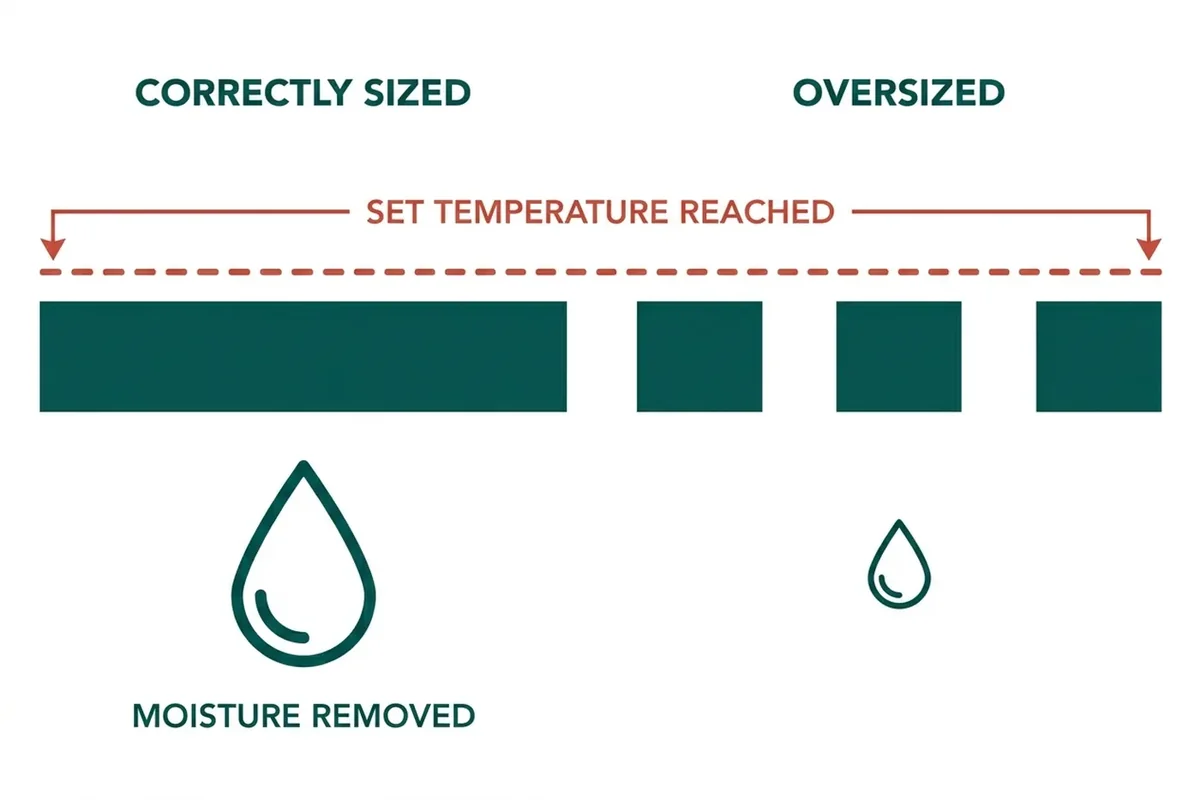
A remediator can price the removal precisely. It cannot price the repair that stops it recurring, because that is not its trade. Correcting run time, sealing duct leakage, adding dehumidification or replacing oversized equipment is HVAC work, and it can be anything from a service call to a new system.
Better to say that plainly than let a customer believe the removal number is the whole cost. A remediation sold as a complete solution on a house with 65 percent indoor humidity is a job that gets sold twice, and the second sale is the one to avoid. Why the equipment does this.
What is not included, by law
Florida licenses mold assessors and mold remediators separately and bars either from doing the other’s work on the same structure within twelve months. The specialist we pass requests to is on the removal half, and does not sample or issue findings on what is growing. Where you need that document — for a claim, a sale or a dispute — you need a licensed assessor at $300 to $800, and it is a separate invoice from a separate company by design.
Straight answers about price
What does mold removal cost in Ocala?
A typical job is $1,500 to $6,000, rising to $6,000 to $15,000 where the whole house is involved. Air handler work is $1,000 to $4,000, contents cleaning $500 to $3,000, and barn or outbuilding work $800 to $4,000. Many local specialists don't charge for the walkthrough; ask when they call.
Why does the price depend on how long it has been going on?
Because damp air causes slow, wide damage rather than fast, concentrated damage. Two months of elevated humidity is a cleaning job. Two years of it has got into wardrobes, then wall surfaces, then the porous materials behind them, and each stage adds a category of work.
Can the work be quoted from photos?
Not usefully. Thin growth photographs badly and the extent is the whole question, so a picture reliably understates it. What genuinely helps before a visit is a humidity reading, because that shows whether the conditions are still active.
Is the first visit free?
Many local specialists don't charge for the first visit, but it depends on the company. Ask when the specialist calls, before they come out. A good one covers what is visible, a humidity reading, and a written removal price. What it is not is an inspection or an assessment - Florida licenses that separately and the remediation specialist is not the licence holder for it.
Why is a big cheap quote suspicious here?
Because on this mechanism the cheap version is fogging or surface treatment across a whole house, which looks thorough and changes nothing. If the air stays above 60 percent it all comes back, and you have paid for a service with a season's shelf life.
Will insurance pay?
Rarely for humidity-driven growth. Policies respond to sudden events, and slow moisture is generally treated as maintenance. A burst supply line is a different conversation, though most policies cap mould cover well below the building limit. Your adjuster decides.
What about the cost of fixing the cause?
That is usually an HVAC invoice rather than a mold one, and it can range from a service call to new equipment. A remediator cannot quote it and should not pretend it does not exist - a removal without it is a purchase with an expiry date.
Book an Ocala mold walkthrough
If you own a humidity gauge, tell us what it reads and where it sits. If you do not, tell us what the thermostat is set to and whether the house sits empty for part of the year. Those two answers explain more local mold than any description of a stain, and they shape what the specialist brings. A local specialist serving Ocala calls you back.