
Ocala Mold Removal Co. passes each Marion County request to one independent local mold specialist: humidity-driven growth, air handler and coil work, contents, leaks and barns. Many local specialists don't charge for the walkthrough, and the specialist works as a remediator, not an assessor.
What a remediation job should include
Removal. Containment, taking out affected porous material, HEPA cleaning what stays, and drying to a measured target. Then a written record of what was removed and what the readings said at the finish.
That is the whole job. It is worth stating plainly, because a great deal of what gets sold in this trade sits somewhere adjacent to it.
Four things a remediation bid should not sell you
1. A test. Sampling and issuing findings on what is growing is mold assessment, and Florida keeps it in separate hands: Fla. Stat. 468.8419 bars a remediator from assessing a structure it remediates within twelve months, and the reverse. When you need that document — for a claim, a sale or a dispute — you need a licensed assessor, and it should not be the company doing the removal.
2. A whole-house fogging. Spraying an antimicrobial through a building with 65 percent indoor humidity treats the growth and leaves the conditions. It photographs well, it is quick, and next August you are where you started.
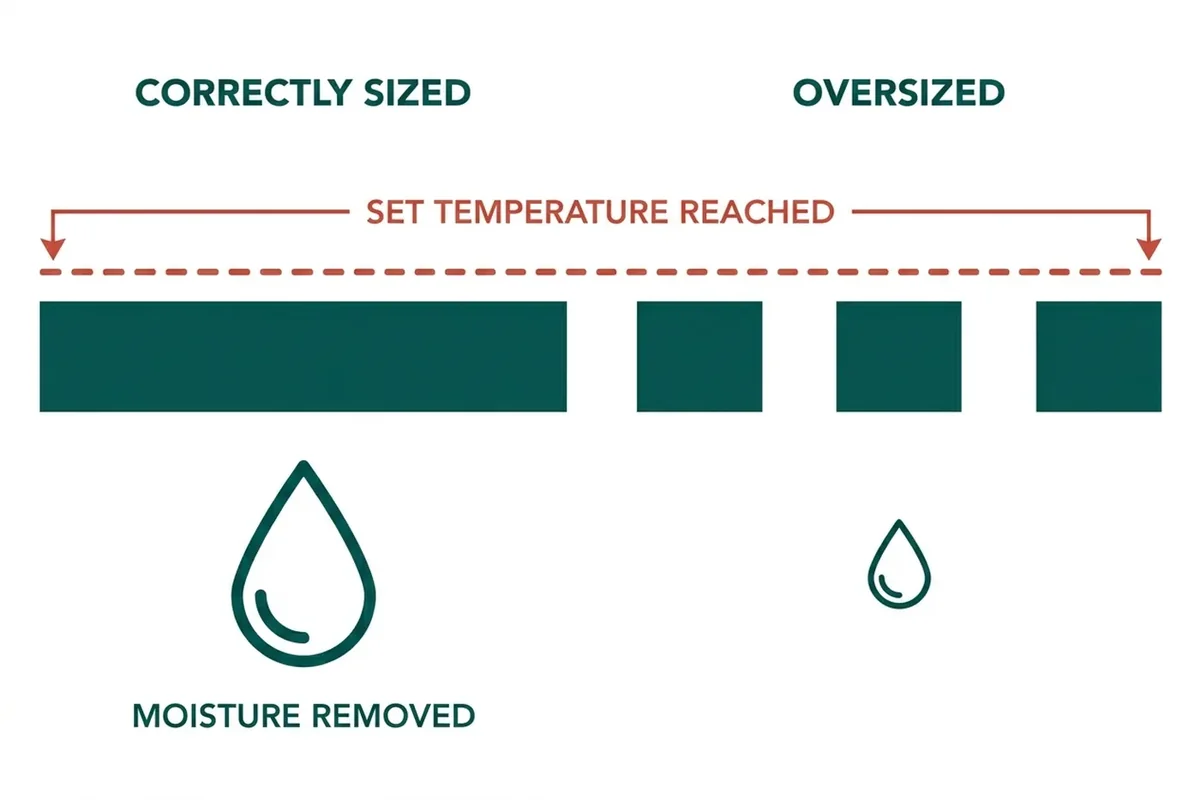
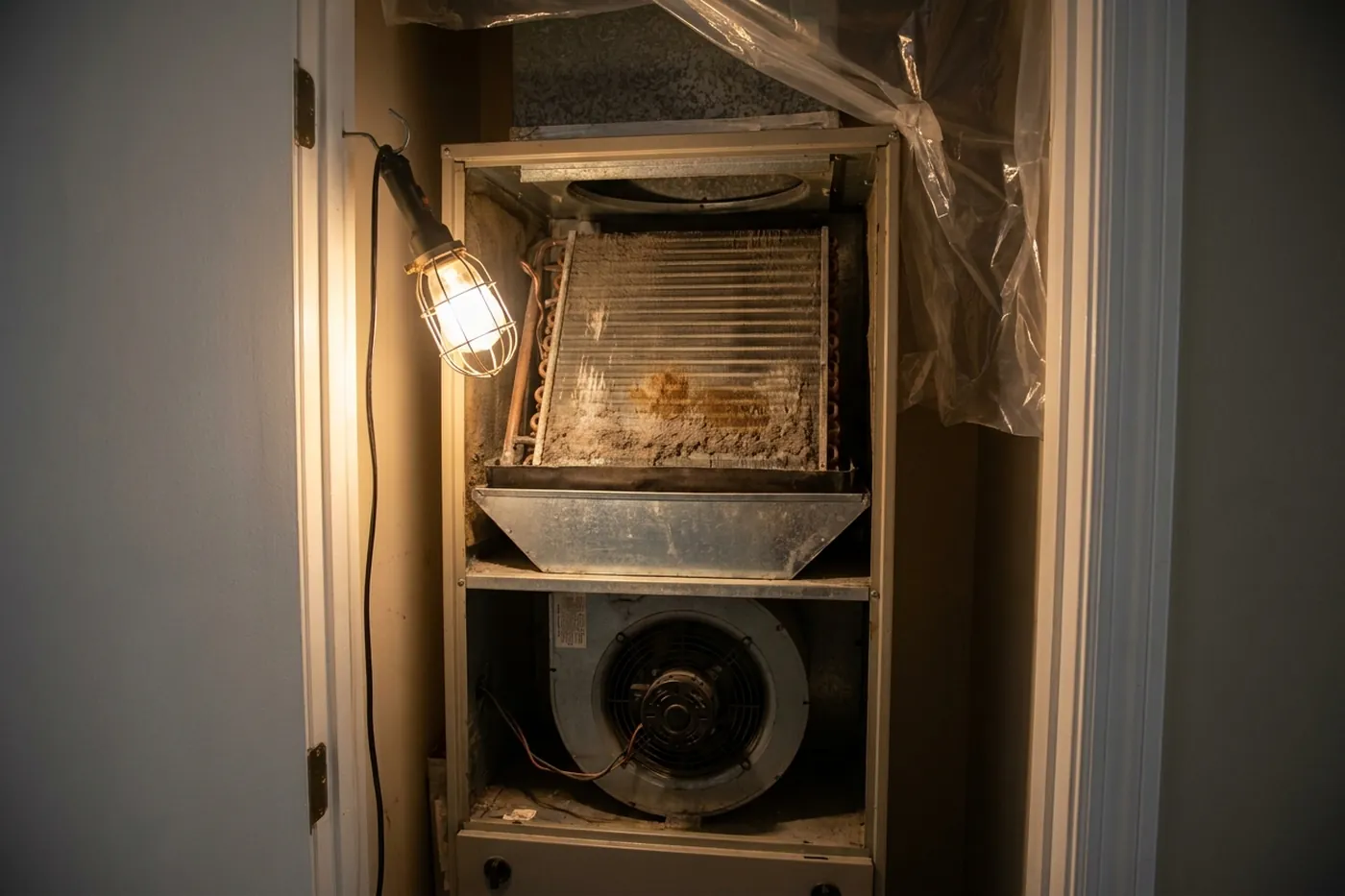
3. Equipment work. A mold remediator does not size, service, install or certify air conditioning. Where the durable fix is run time, duct leakage or an oversized system — which locally it often is — that is an HVAC contractor’s invoice, and it is worth spending your money there first.
4. A health opinion. Whether anything in your house is affecting anyone in it is a question for a physician. A remediator can describe what was found and where. Nobody in this trade knows what it is doing to you, and none should claim to.
What to ask the specialist to commit to
- A humidity reading taken somewhere meaningful, not beside the thermostat
- A written scope that says what leaves the building and what gets cleaned in place, as separate lines
- The reading that counts as dry, written down, and the final one taken before the job closes up
- An explicit statement when the durable repair is not theirs to sell
- The specialist's licence number whenever you ask, so you can look it up on the DBPR register yourself

Why this market rewards the refusals
Because the ordinary problem here is invisible and recurring. A company that removes growth, says nothing about the air, and comes back next year is not necessarily dishonest — it may simply never have measured anything. But the customer pays twice either way.
The corrective is unglamorous: take a reading, say what it means, and be willing to name a trade that is not your own. See what that produces on the cost guide, or how to take the reading yourself on the 60 percent page.
Straight answers about us
How long has this site covered Marion County?
Deliberately blank rather than filled with a comfortable-sounding number. The refusals on this page are the part you can hold any company to, and the first of them can be tested before anybody visits.
Is the remediator licensed?
Florida licenses mold remediators, and separately mold assessors, under Chapter 468 Part XVI. Ask the specialist who calls you back for their licence number and check it on the DBPR register - a number said aloud proves nothing until you have looked it up.
Why will the specialist not test the air?
Because sampling and issuing findings is mold assessment, and Fla. Stat. 468.8419 bars a remediator from doing that on a structure it then remediates within 12 months. It is not caution on anyone's part; it is the licence somebody else holds.
You keep sending people to HVAC companies. Why?
Because on the ordinary local problem the durable repair is run time, duct leakage or equipment size, and none of that is mold remediation. Removing growth without it produces a house that needs removing again, which is a good business model and a bad service.
Book an Ocala mold walkthrough
If you own a humidity gauge, tell us what it reads and where it sits. If you do not, tell us what the thermostat is set to and whether the house sits empty for part of the year. Those two answers explain more local mold than any description of a stain, and they shape what the specialist brings. A local specialist serving Ocala calls you back.