
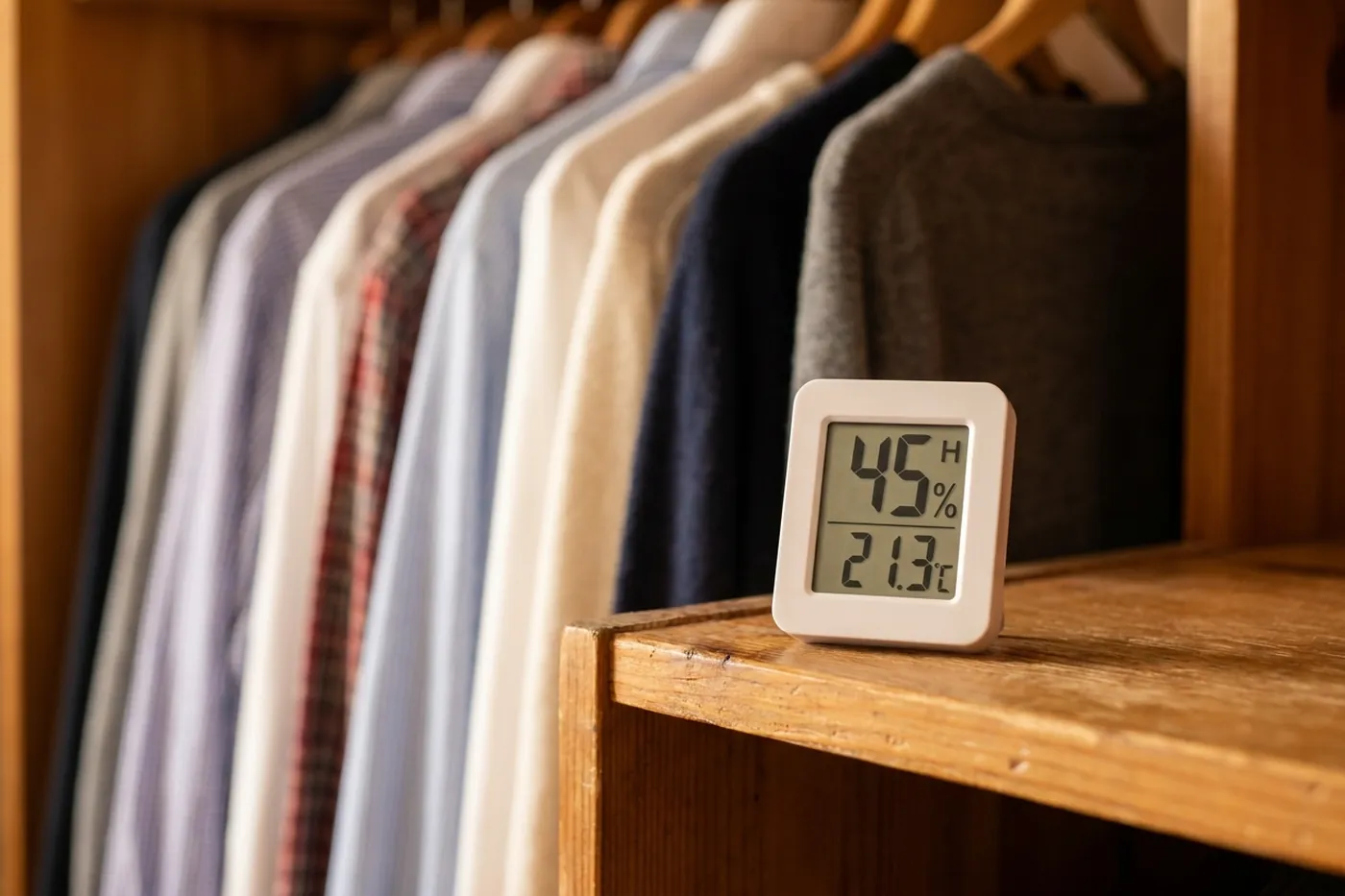
Keep indoor relative humidity below 60 percent, ideally 30–50 percent — that is EPA guidance, and it is the threshold that decides whether mold removal in an Ocala house is a repair or a recurring bill. A $12 hygrometer settles it.
Where the 60 percent figure comes from, how to measure your own house properly, and what to do with the answer.
Why 60 percent is the number
Mould does not need liquid water. It needs moisture, something organic to eat, and time. Ordinary house dust on an ordinary painted wall supplies the food, so the only variable that matters is how much moisture is available at the surface — and that tracks the relative humidity of the air touching it.
EPA puts the line at 60 percent and recommends 30 to 50. Below that band, surfaces stay dry enough that dust is just dust. Above it, the same surfaces become somewhere things can live, and nothing has to leak for that to be true.
The EPA also gives the other number worth knowing: wet building materials must be dried within 24 to 48 hours to avoid growth. That one applies when there has been an actual event, and it is why speed matters so much after a leak.
How to measure your own house
| Step | Detail |
|---|---|
| Buy two hygrometers | Digital, around $12 each. Precision beyond a percent or two is irrelevant here |
| Put one where it feels worst | A closed bedroom, a closet, the far end from the air handler |
| Put the other in the living area | For comparison — the gap between them is informative on its own |
| Leave them a week | Long enough to cover the daily cycle and a change in the weather |
| Note the peak, and the circumstances | Overnight, nobody home, thermostat raised, windows opened |
Deliberately not next to the thermostat. That is usually the best-conditioned spot in the building, which is exactly why it is the least representative one.
What the reading tells you
Consistently under 50 percent. Air is not your problem. If you have growth, it has a source, and finding it is a different exercise.
Drifting 55 to 65 percent. The common local reading, and the one that produces thin growth spread over many surfaces months later. Nothing is broken in a way you can see. The system is simply not running long enough to dry the house.
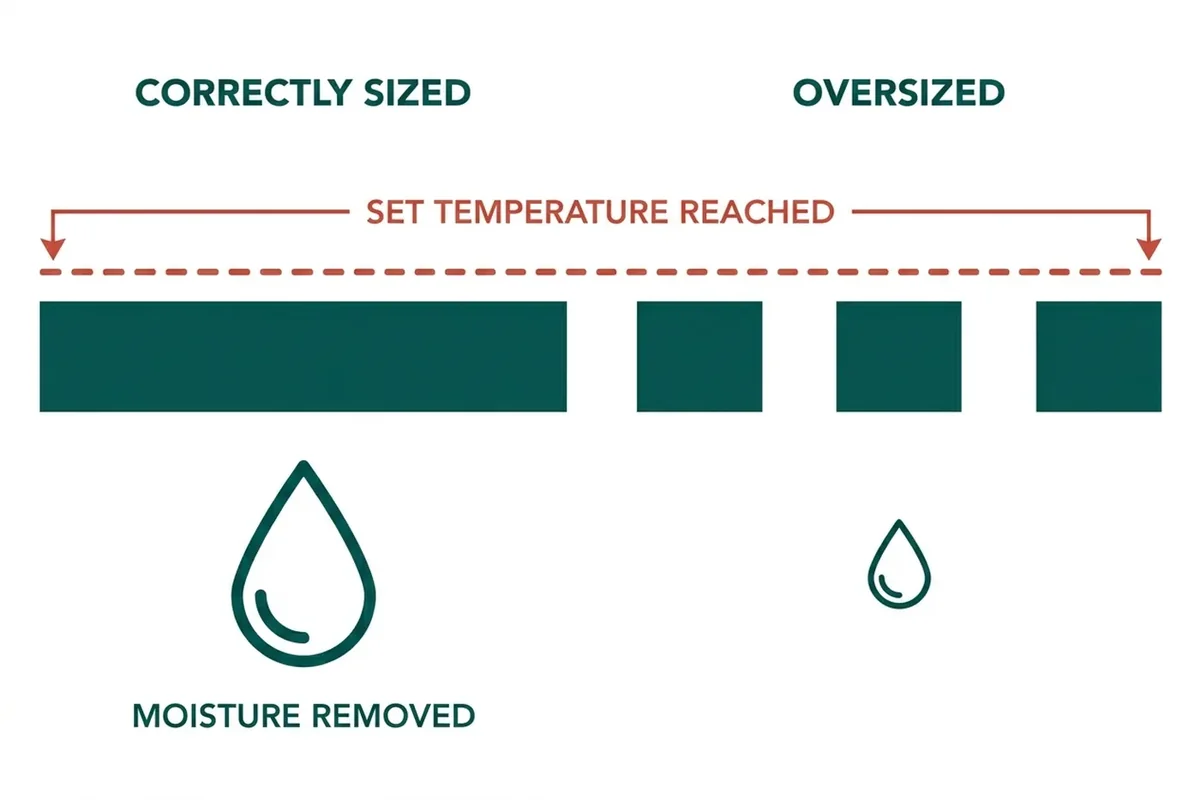
Over 65 percent regularly. Worth acting on quickly, and worth having an air conditioning contractor look at run time, duct leakage and equipment size before you spend anything on remediation. Details on the sizing page.
Why this is unusually important in Marion County
Ocala takes 50.80 inches of rain a year, less than any coastal market in this region, and carries 3,126 cooling degree days, more than any of them. The outdoor water is not the problem and the cooling season is long, which puts an unusual amount of weight on one appliance doing one job properly for a large part of the year.
It also means the diagnosis people expect — find the leak — is usually the wrong one, and the diagnosis that is right cannot be seen at all. It can only be measured. See what that means for removal and what it costs.
Humidity numbers, answered plainly
What indoor humidity is safe?
EPA guidance is to keep indoor relative humidity below 60 percent, and ideally between 30 and 50 percent. Below 60 you are broadly out of trouble; above it, ordinary dust on ordinary surfaces starts to become habitable without any liquid water involved.
What should I buy to measure it?
Any digital hygrometer. They start around $12 and the cheap ones are accurate enough for this purpose, because you are looking for the difference between 45 and 65 percent rather than a laboratory reading. Buy two and put them in different rooms.
Where should I put it?
Not next to the thermostat, which is usually in the best-conditioned spot in the house. Put one in the room that feels worst - a closed bedroom, a closet, the far end from the air handler - and one in the main living area for comparison.
How long do I need to log it?
A week tells you most of what you need, because it covers the daily cycle and a change in weather. Note the highest reading you see and what the house was doing at the time - windows open, nobody home, air conditioning off overnight.
Does a dehumidifier solve it?
In one room, often yes, and it is a reasonable interim step. Across a whole house it is treating a symptom of an air conditioning problem with a second appliance and a second electricity bill. Worth knowing which one you are buying.
My humidity is fine but I still have mould. Now what?
Then look for a source. Concentrated growth with a definite centre points at water rather than air, and the usual suspects are cabinet plumbing, a toilet flange, a roof penetration or a slab leak. That path is on the leak page.
Book an Ocala mold walkthrough
If you own a humidity gauge, tell us what it reads and where it sits. If you do not, tell us what the thermostat is set to and whether the house sits empty for part of the year. Those two answers explain more local mold than any description of a stain, and they shape what the specialist brings. A local specialist serving Ocala calls you back.