
An oversized air conditioner drives mold removal work in Ocala by cooling faster and running less — and dehumidification only happens while it runs. Florida’s energy code, R403.7, requires Manual S sizing on Manual J loads and allows no safety factors.
Why bigger is worse here, what the code actually requires, and how to work out whether this is your problem.
The trade the thermostat cannot see
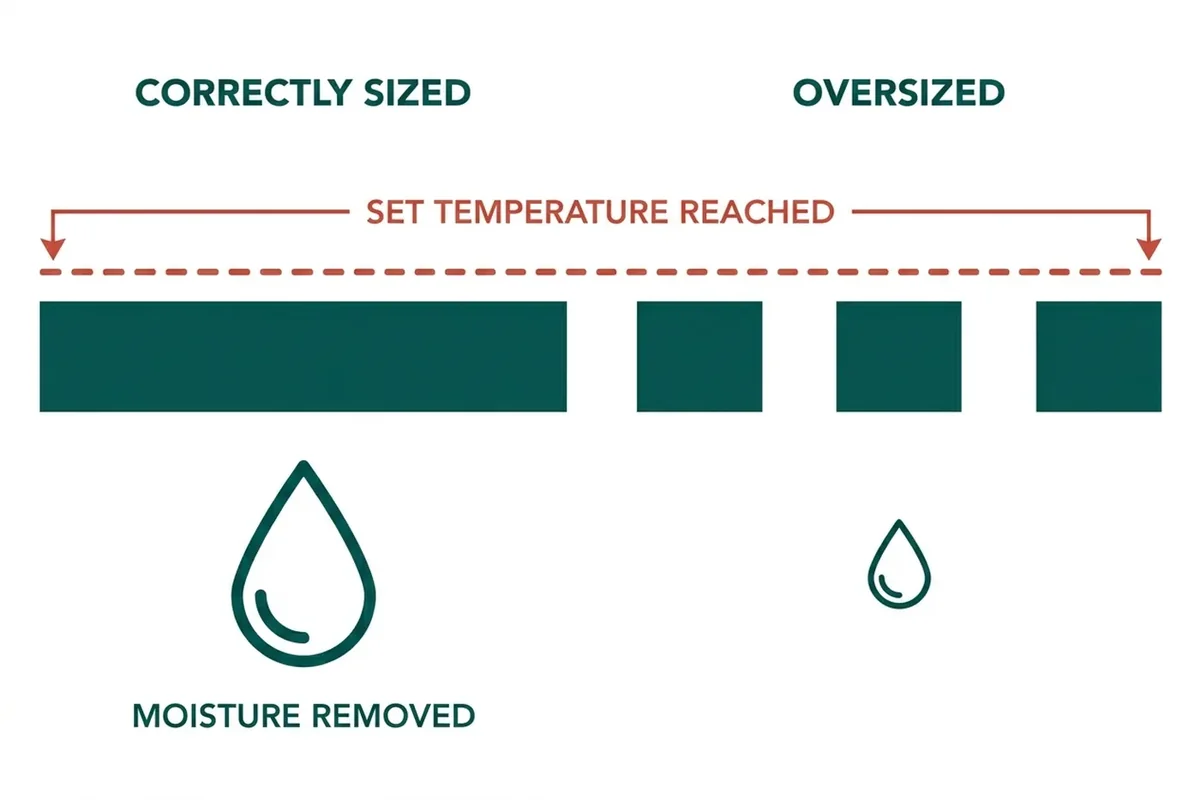
Your thermostat measures temperature. It has no opinion about moisture. So the moment the air reaches the set point, the system stops — whether or not it has removed any meaningful amount of water from the house.
A correctly sized unit runs long, steady cycles on a hot day, moving a lot of air across a cold coil and condensing a lot of water out of it. An oversized unit blasts the air cold in a short burst and shuts down. Both hold the temperature you asked for. Only one of them dries the building.
That is the whole mechanism, and it explains the complaint that makes no sense otherwise: the house is cold and it still feels clammy, and there is mould in the closets of a home with no leak anywhere.
What the code requires
Florida takes this seriously enough to legislate. Section R403.7 of the Florida Building Code, Energy Conservation requires that heating and cooling equipment be sized in accordance with ACCA Manual S, based on loads calculated in accordance with ACCA Manual J or another approved methodology, for the directional orientation of the building.
And then it closes the obvious loophole in one sentence: the code does not allow designer safety factors, provisions for future expansion or other factors that affect equipment sizing. Rounding up to the next size to be on the safe side is not a permitted design decision. It is the specific habit the provision exists to prevent.
Whether any particular installation followed that is a matter for the installer and the permitting authority. A remediation contractor does not make code compliance determinations — but a homeowner is entitled to ask their HVAC company for the load calculation.
Is it your problem? Three checks
| Check | Points to oversizing when… |
|---|---|
| Run length on a hot afternoon | Cycles are short and frequent rather than long and steady |
| Indoor humidity | Sits above 60 percent while the temperature is comfortable |
| Where it feels worst | Rooms furthest from the thermostat, and closed rooms |
None of those is conclusive, and all three together are worth a conversation with an air conditioning contractor. Ask for a Manual J load calculation and a comparison against the equipment that is actually installed. If the answer is that the fitted capacity comfortably exceeds the calculated load, you have found your explanation.
The other candidate: duct leakage
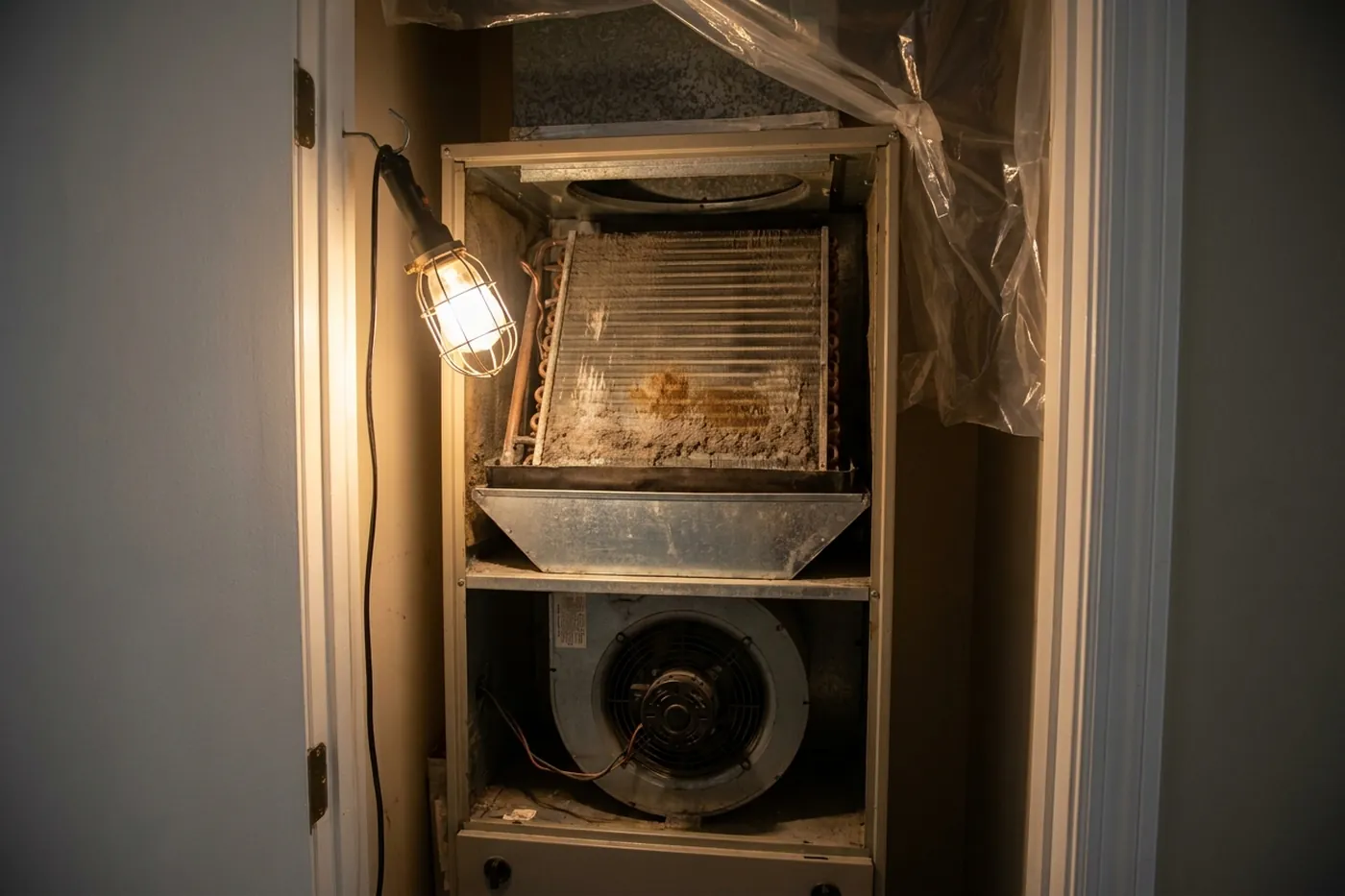
A correctly sized system can be defeated entirely by return ducts leaking in a hot attic, because they pull humid outside air into the house continuously. The symptom looks identical from inside — comfortable temperature, high humidity, growth in still corners.
Both are HVAC work rather than mould work, and that is the honest limit of this page. A remediator removes what has grown; correcting run time, duct leakage or equipment size is somebody else’s trade and it is the half that stops it returning. What removal costs is on the humidity page, and how to measure where you stand is on the 60 percent page.
Sizing, answered plainly
Can an air conditioner be too big?
An air conditioner can absolutely be too big, and it is a common fault rather than an exotic one. Extra capacity cools the air faster, which satisfies the thermostat sooner and shuts the system down sooner. Since dehumidification only happens while the system runs, less run time means a wetter house.
What does the Florida code say about sizing?
Florida Building Code, Energy Conservation section R403.7 requires heating and cooling equipment to be sized in accordance with ACCA Manual S based on loads calculated per ACCA Manual J. It also states the code does not allow designer safety factors or provisions for future expansion.
So oversizing is against the code?
Deliberately padding the calculation is what the code addresses - it does not permit safety factors or allowances for future expansion in the sizing. Whether any particular installation complied is a question for the permitting authority and the installer, not for a mold company.
How do I know if mine is oversized?
The symptom pattern is short runs and a damp house: the system reaches temperature quickly, cycles off, and indoor humidity sits above 60 percent anyway. An HVAC contractor can run a Manual J load calculation and compare it with what is fitted.
Is a variable-speed system better for humidity?
Generally yes, because it can run for long periods at reduced output, which is exactly what dehumidification needs. That is a question for an air conditioning contractor rather than a mould company, and it is a purchase decision rather than a repair.
Could it be the ducts rather than the size?
Very possibly. Leaky return ducts in a hot attic pull in humid air continuously, which can defeat a correctly sized system entirely. Duct leakage and equipment size produce a similar symptom and need different fixes, which is why the diagnosis belongs with an HVAC professional.
Book an Ocala mold walkthrough
If you own a humidity gauge, tell us what it reads and where it sits. If you do not, tell us what the thermostat is set to and whether the house sits empty for part of the year. Those two answers explain more local mold than any description of a stain, and they shape what the specialist brings. A local specialist serving Ocala calls you back.