
The Ocala walkthrough takes 45–90 minutes, many local specialists don't charge for it, and a good one produces a written removal price plus a humidity reading. Before it, a $12 hygrometer and a week of logging will tell you whether the air is the problem.
What to measure yourself, what happens on the day, and what to be holding at the end of it.
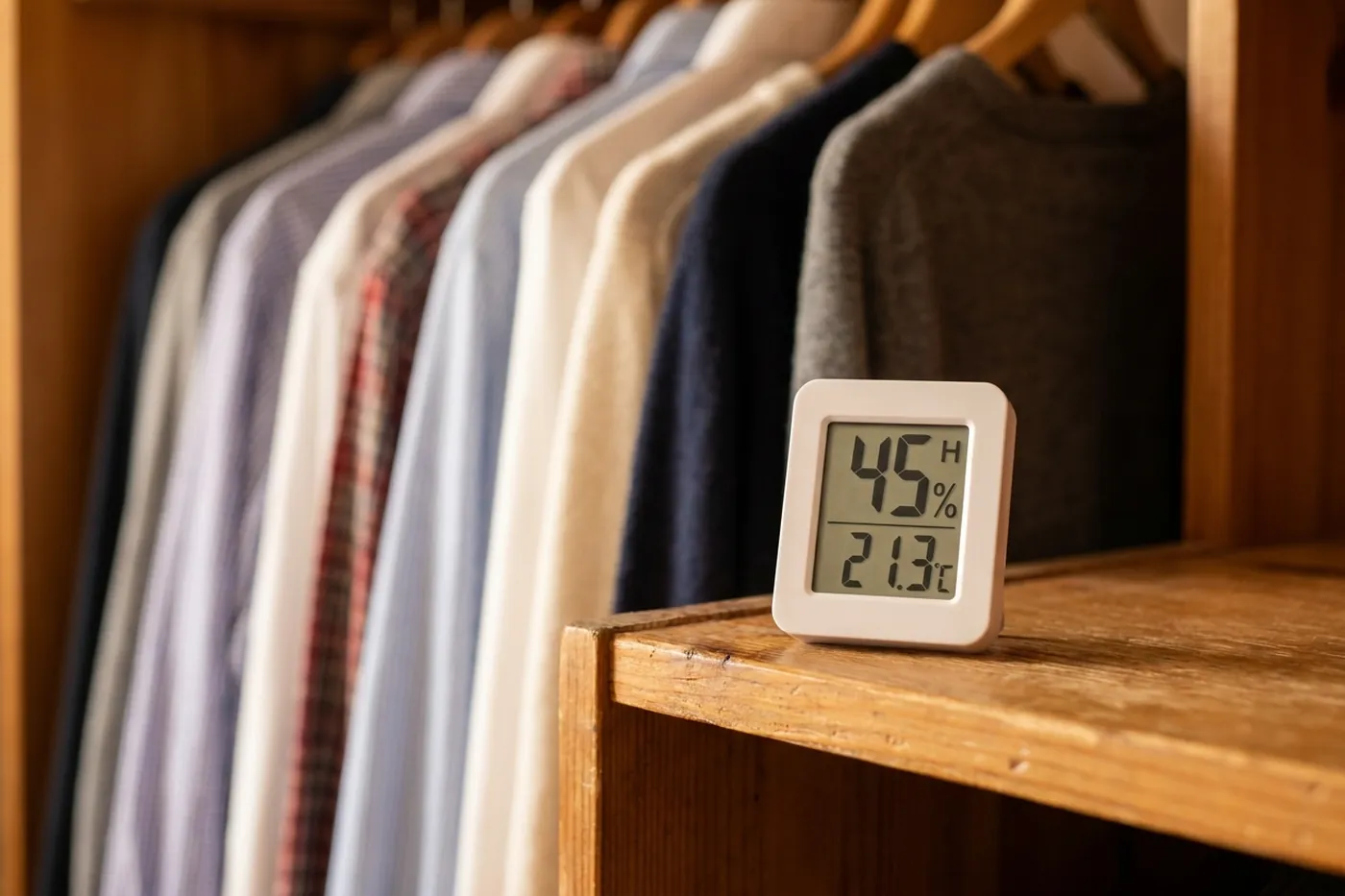
What you can find out for twelve dollars
This is the only trade we know of where the customer can run the decisive test themselves, cheaply, before anybody arrives. It seems worth telling people that.
| Step | How |
|---|---|
| Buy a digital hygrometer | Around $12. Two is better than one |
| Put it where it feels worst | Closed bedroom, closet, the far end from the air handler |
| Leave it alone for a week | Long enough for a weather change and the daily cycle |
| Write down the highest number | And what the house was doing — empty, windows open, thermostat raised |
| Compare with 60 percent | Below it consistently, the air is not your problem. Above it, it probably is |
Not next to the thermostat, which sits in the best-conditioned part of the house and is the least representative place in it. The reasoning is on the 60 percent page.
What a good walkthrough covers
- Walk the whole property, including the rooms you have not mentioned
- Take its own humidity readings, in more than one location
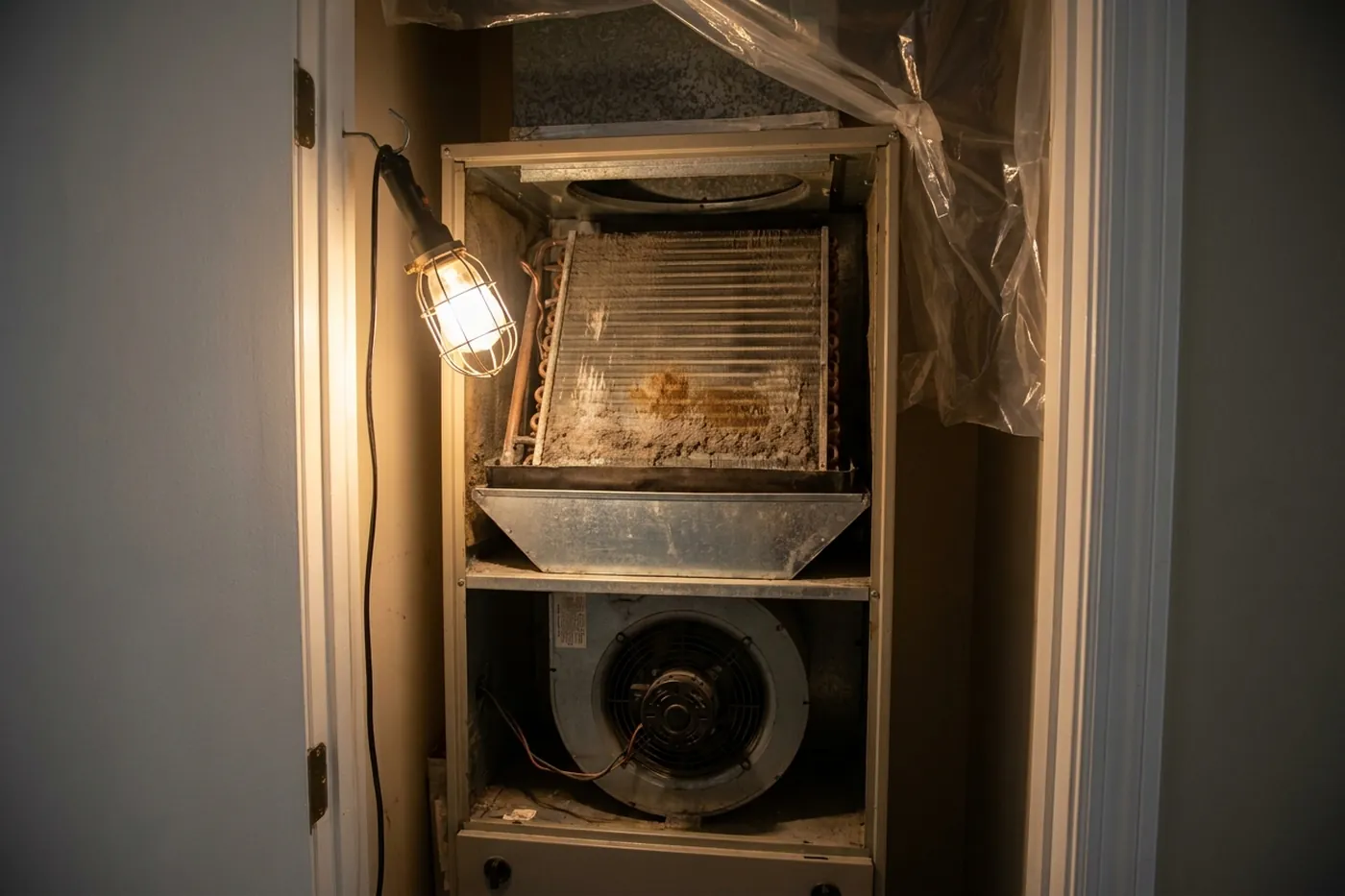
- Look at the air handler and the register faces, because that is the likeliest single spot
- Open the closets and look at the contents, which usually show it first
- Write a removal price, split by what leaves and what is cleaned in place
What the visit is not
It is not an inspection and not an assessment. Florida licenses mold assessment separately from mold remediation and bars either from doing the other’s work on the same structure within twelve months, so the remediation specialist does not sample or hand you findings on what is growing or why.
If you need that document — because there is a claim, a sale, a landlord or a dispute — you need a licensed mold assessor, typically $300 to $800, and it has to be a different company from whoever does the removal. That is the design of the market rather than a preference of ours.
What to be holding at the end
- The humidity readings, with the locations they were taken
- A written removal price, with removal and cleaning as separate lines
- The reading that counts as dry, where drying forms part of the work
- An honest statement if the durable repair belongs to an air conditioning contractor
- Your own read of any competing document, including what it does not mention
Ask to keep all of that whether or not you engage the specialist, and a fair number of people take the humidity reading, go to an HVAC company, and never need a remediation at all. That is a good outcome.
Straight answers about the walkthrough
Do I need to buy anything before the visit?
You don't need to buy anything before the visit, and one thing is worth buying anyway. A digital hygrometer costs around $12, and a week of readings from the worst room turns the central question of this whole trade from an opinion into a number before anybody quotes you.
What does the walkthrough include?
A look at everything visible in the rooms you name and the ones you do not, a humidity reading taken away from the thermostat, and a written removal price broken into what leaves the building and what is cleaned in place.
How long does it take?
Forty-five minutes to an hour and a half. Contents-heavy houses take longer because the sorting is the slow part, and a property with outbuildings takes longer again.
Is it an inspection?
This is not an inspection, and the distinction is legal rather than cosmetic. Inspections and assessments involve sampling and written findings on what is growing, which Florida licenses separately. The specialist looks, measures the air, and prices the removal.
What if there is nothing worth removing?
It happens, particularly on early calls where somebody smelled something and acted quickly. An honest specialist says so, and if the humidity reading was high you get pointed at the trade that can actually fix it.
Can I be somewhere else during the visit?
Better if you are not, at least at the start and the end. Half the useful information is what you have noticed over months, and the questions people ask once they see the humidity number are usually the good ones.
Book an Ocala mold walkthrough
If you own a humidity gauge, tell us what it reads and where it sits. If you do not, tell us what the thermostat is set to and whether the house sits empty for part of the year. Those two answers explain more local mold than any description of a stain, and they shape what the specialist brings. A local specialist serving Ocala calls you back.